
Gurwi: How to turn building in public into a Shipaton #BuildInPublic win
How building in public can get strangers to give you money to build your dreams, capture the attention of politicians, and bring loyal customers
 Perttu Lähteenlahti
As part of Shipaton, we're highlighting stories about past participants to show what's possible when you build an app. Whether you're aiming to sharpen your skills, launch your first product, grow your app, or win the whole thing, these interviews are meant to teach and inspire you.
When Captain of Shipaton, Charlie Chapman, announced the winner of Shipaton 2025’s #BuildInPublic award — a prize that included $15,000 and travel and lodging to New York — the winner was nowhere in sight. Camilo Peñalver, who had spent the previous months posting almost daily while building Gurwi, was at home watching the ceremony on his laptop.
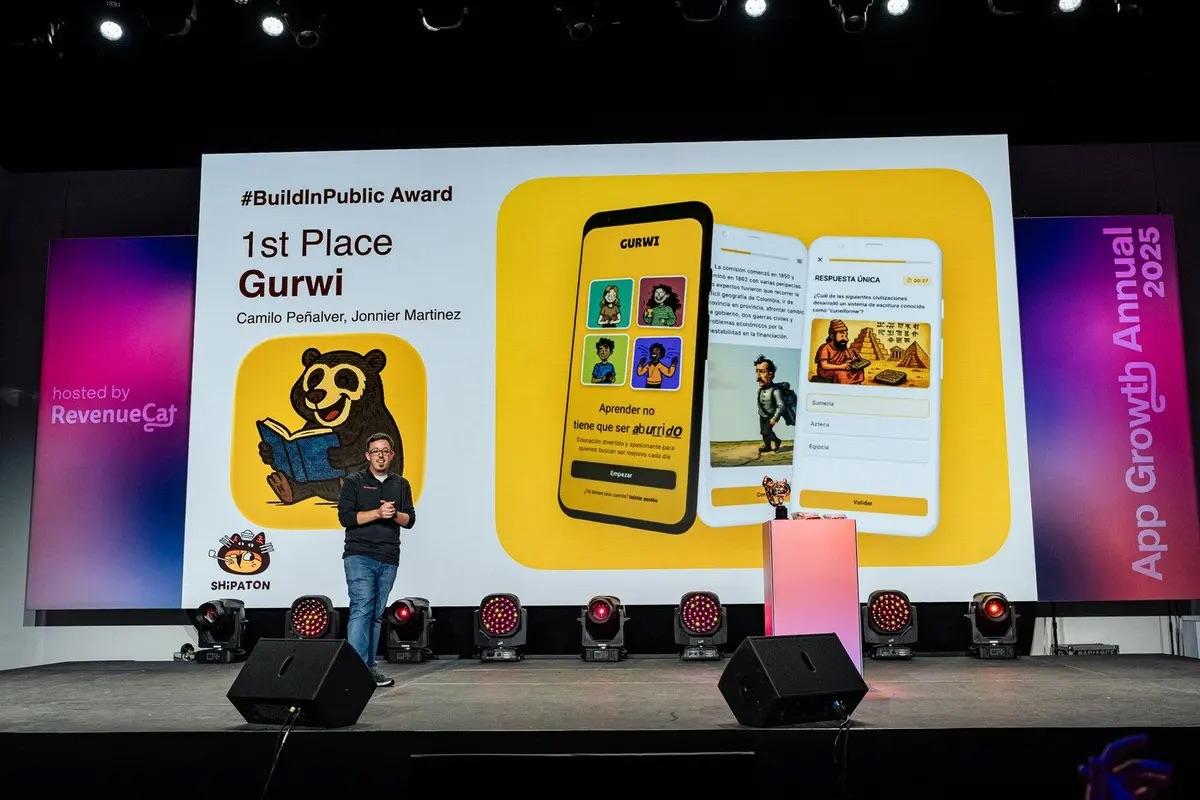
Charlie Chapman announcing Gurwi as the first place winner
The choice not to be there had not been his — there had been some obstacles; a common theme in the story of Gurwi.
This is the story of Gurwi and Camilo, a product and its builder that have become almost interchangeable. It follows his path from a YouTube course, to an ugly viral Figma prototype, to the Gurwi. Most importantly, it is about how he built all of this in public — leading strangers to give him cash, politicians to talk with him, and millions of views on TikTok that converted into loyal Gurwi customers.
Discovering Gurwi
Born in Santa Marta, Camilo spent his childhood moving across Colombia's Caribbean region before finishing high school in Riohacha, the capital of La Guajira — one of the country's poorest regions. The limited educational opportunities he encountered helped shape the problem he would later try to solve. He went on to study communication, journalism, and psychology while pursuing projects in video production, fiction, and entrepreneurship.
That mix of education, media, and entrepreneurship eventually led him to teach himself to code and imagine Gurwi as the “Duolingo for everything”. His first public version was a crude Figma prototype, shared in a TikTok video promising a mobile app that could make education more accessible in Colombia.
That video reached more than 250,000 views, 40,000 likes, and more than 500 comments, proving the idea already had an audience.
10 million from a stranger
The video even caught the attention of Colombia’s then Minister of ICT, Mauricio Lizcano, who congratulated Camilo publicly. Camilo used the opportunity to ask for help, but the exchange produced only a short call and no practical support.
Yet, Camilo kept building and posting, even though development, recording, and editing left little time for anything else. In 2023, he published a video about alleged irregularities in Fondo Emprender, a government seed-capital program. It reached one million views. The following year, he applied to the same program but was rejected and was unable to apply again because no further calls for pitches were announced. Later, a Colombian-born tech entrepreneur living abroad saw another video Camilo posted in 2024 and, after a 30-minute call, gave him 10 million Colombian pesos to continue building Gurwi.
The funding kept the project moving, but Gurwi still took almost a year to reach the app stores. The last part was a real sprint — but not because of funding, because of Shipaton.
Moving from one technology to another
Camilo had built the first version of Gurwi using FlutterFlow, a Flutter-based visual development platform. The stack worked great for building the MVP, but he felt that the platform was limiting some of the directions they wanted to take the app, mainly in supporting the rendering of the dynamic content that powers the Gurwi lessons.
Help arrived in the form of Jonnier Martínez, who joined to work on Gurwi in exchange for a small percentage of it. Since he had been programming longer than Camilo and had more experience in backend development, they decided to move from FlutterFlow to Flutter and build both iOS and Android versions of Gurwi using it, as well as a new backend and web version of Gurwi, for managing the content the app displays.
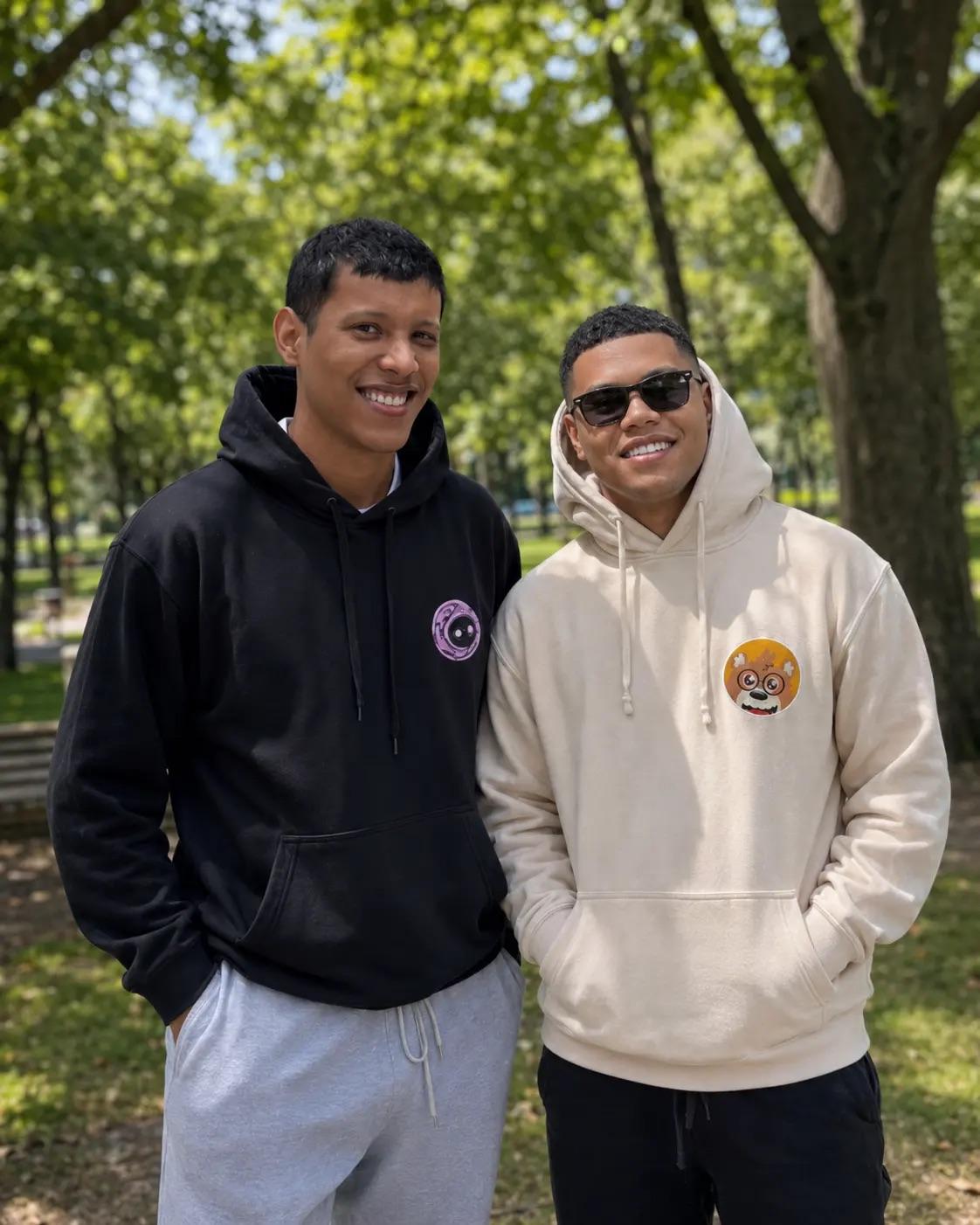
Camilo Peñalver and Jonnier Martínez
Discovering Shipaton
Camilo found Shipaton on X because he was already following RevenueCat and the wider Flutter ecosystem. Gurwi was still months from launch and the team had planned to wait until the following year, but the opportunity was too valuable to pass up.
The $15,000 prize could provide the starting capital Camilo had struggled to find through local programs. Winning could also help the team start a company in the United States, access Stripe, and pursue opportunities that were otherwise difficult to reach from Colombia.
Shipping before they were ready
Entering Shipaton meant bringing a launch planned for the following year forward by several months. Neither Camilo nor Jonnier had shipped a production app before, and the move from FlutterFlow to Flutter was still underway. They could reuse parts of the interface and the visual direction, but for example the web editor for creating lessons had to be built almost from scratch.
The work split along their strengths. Jonnier focused on development of the web editor, while Camilo moved between programming, strategy, marketing, recording, and editing of the mobile app. They submitted roughly three days before the deadline. The forms were familiar territory for Camilo; the harder part was presenting an app that was still new to both its users and its builders. They deliberately chose to wait until the last minute before posting the form, in order to attach the most up to date app metrics and marketing results.
Building in public, in two languages
Camilo had documented Gurwi in Spanish from the first rough Figma prototype. For Shipaton, he created a separate English-language account on X, where RevenueCat’s team and the judges were most active. As Jonnier and Camilo shipped features, Camilo also posted carefully edited progress videos, told the story behind the app, and tagged #Shipaton and #BuildInPublic so the work remained high on the feed.
The largest audience still came from Spanish-speaking social media. Camilo asked other creators to share Gurwi’s story, extending the campaign beyond what he could produce alone. Together with his own pitch, those videos generated more than four million views.
“The point is we ran. We gave it everything. My world became RevenueCat and Shipaton.”
The reach made Gurwi difficult to miss, but reach alone did not win the category. The judges chose Gurwi for the authenticity of its build-in-public story and the care visible in both the app and the videos around it.
The app made it to New York first
Charlie told Camilo about the win before the public announcement, since the prize included a trip to New York. Camilo already had a passport, but not a US visa, and appointments could take months or even years. After repeatedly checking for cancellations, he secured an appointment in Bogotá and the visa was approved.
Sadly, approval was not the same as having his passport back in hand. The Monday before the ceremony was a public holiday in Colombia, leaving too little time for the stamped passport to arrive before his flight. Camilo watched the ceremony from home while Gurwi appeared on a Times Square screen. The app had reached New York before its builder.

Gurwi at Times Square
Beyond Shipaton
The $15,000 prize became the starting capital Camilo and Jonnier had spent years trying to secure. The Times Square appearance also gave Camilo a new story to share, and that story travelled through Colombian television, radio, and social media.
The attention converted into customers. Camilo’s later account puts Gurwi’s user payments during the year of the win at more than $19,000, before the app stores’ 15% commission. The team also founded Gurwi LLC, giving the team a chance to monetize with Stripe, something that was not possible in a Colombia-based company.
After Shipaton, Camilo and Jonnier have kept building Gurwi, growing the course catalogue, exploring B2B uses, and launching prompt-generated, hyperpersonalized classes. It’s safe to say that the journey of Gurwi is far from over.
Advice for Shipaton participants
For this year’s participants, Camilo’s first advice is to tell a story. A strong app is not enough on its own; builders should show why they’re making it — “try to make people connect with the project and the person itself.”
Nonetheless, visibility is not a substitute for purpose. Camilo rejects copying existing apps for quick money: build something original, or at least something rooted in a real motivation. Start with something you want to use and become your own user. This helps you understand which problems matter, and gives the product a reason to outlive Shipaton.
Finally, make the work visible. Throughout the campaign, Camilo documented the process, asked other creators for help, and of course: shipped. No amount of visibility can replace shipping the app, and continuing to ship features which people want.